Key takeaways
- A chiller plant is a complete water-side and air-side system—not only a chiller.
- Load profile, redundancy, plant space and maintenance strategy shape the architecture.
- VRF and chillers should be compared against project conditions, not generic cost claims.
How central cooling works
A chiller produces chilled water that is circulated through a piping network to air-handling units, fan-coil units or other terminal equipment. The plant may also include pumps, valves, expansion equipment, water treatment, controls and—in water-cooled systems—condenser-water equipment.
Because these parts operate as one system, plant performance depends on hydraulic design, controls, air-side selection and commissioning as much as on the chiller itself.
When a chiller plant may be appropriate
Central cooling is often evaluated for larger buildings, campuses, industrial facilities and projects that need substantial coordinated capacity. It can offer a centralized maintenance strategy and a broad range of air-side configurations.
- Large or concentrated cooling demand
- Buildings with significant fresh-air and air-handling requirements
- Projects needing plant redundancy or future expansion
- Facilities with an established central-plant operations team
Air-cooled and water-cooled approaches
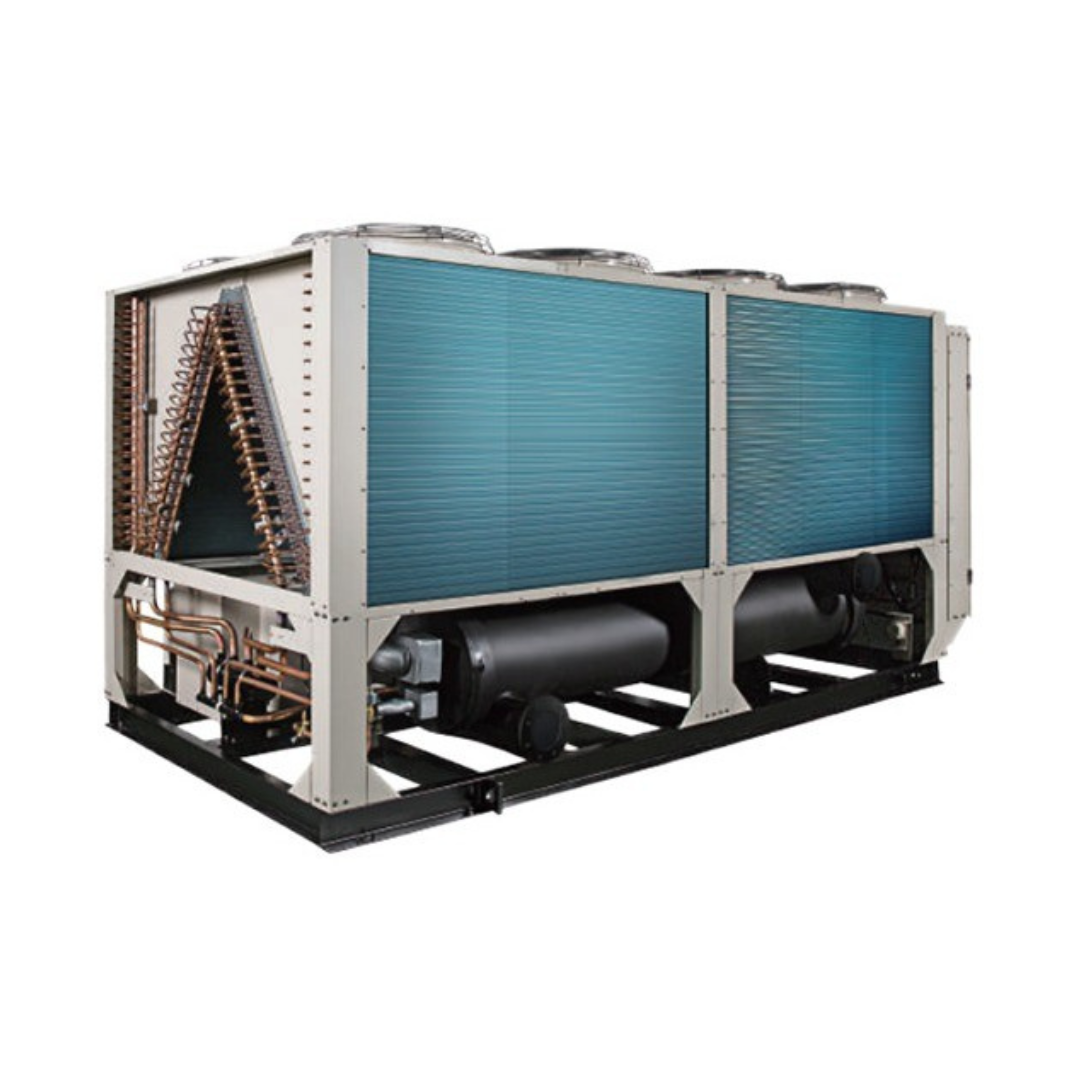
Air-cooled chillers reject heat directly to outdoor air and can reduce the number of water-side components. Water-cooled plants add condenser-water equipment and water treatment but may be evaluated for larger or more demanding applications.
Neither approach is universally best. Available space, water management, ambient conditions, acoustic requirements, maintenance capability and lifecycle evaluation should guide the choice.
Core design coordination
The design team should coordinate plant layout, equipment access, structural loading, electrical demand, piping routes, drainage, ventilation, acoustic control and building-management integration. Space for tube pulling or major component replacement may be relevant for certain equipment types.
A clear sequence of operation is essential. Pumps, valves, chillers and terminal units should respond as a coordinated system across full-load and part-load conditions.
Commissioning and lifecycle planning
Commissioning should verify water flow, temperatures, control sequences, safeties and terminal performance using approved project procedures. The handover package should provide the facility team with equipment records, operating logic and maintenance requirements.
Lifecycle planning should include access, water quality where applicable, consumables, specialist support and the consequences of planned or unplanned plant shutdowns.
Frequently asked questions
Practical questions about this topic
Is a chiller always more efficient than VRF?+
No. Efficiency depends on equipment selection, system design, load profile, controls, climate and operation. The complete systems should be evaluated for the actual project.
Does every large building require a water-cooled chiller?+
No. Air-cooled, water-cooled, VRF and mixed solutions may all be considered depending on the application and constraints.
What information is needed for early chiller selection?+
Cooling loads, load profile, air-side requirements, plant location, electrical information, redundancy needs and project operating strategy are important starting points.
Project support
Need support with an HVAC project?
Share your building type, project location, drawings and current stage. Abontika can help coordinate the appropriate technical next step.