Key takeaways
- Begin with the building requirement before choosing a product family.
- All model-specific limits and performance values must come from approved current documentation.
- Selection, installation and after-sales planning should be considered together.
Start with the HVAC requirement
A Hitachi HVAC enquiry should begin with the application, cooling loads, zoning, fresh-air requirement and project constraints—not with a model number. Commercial projects may require a VRF system, a chiller-based solution, packaged equipment or a coordinated combination.
An engineering-first process establishes what the building needs before matching that requirement to an available and supported product family.
Hitachi VRF project pathway
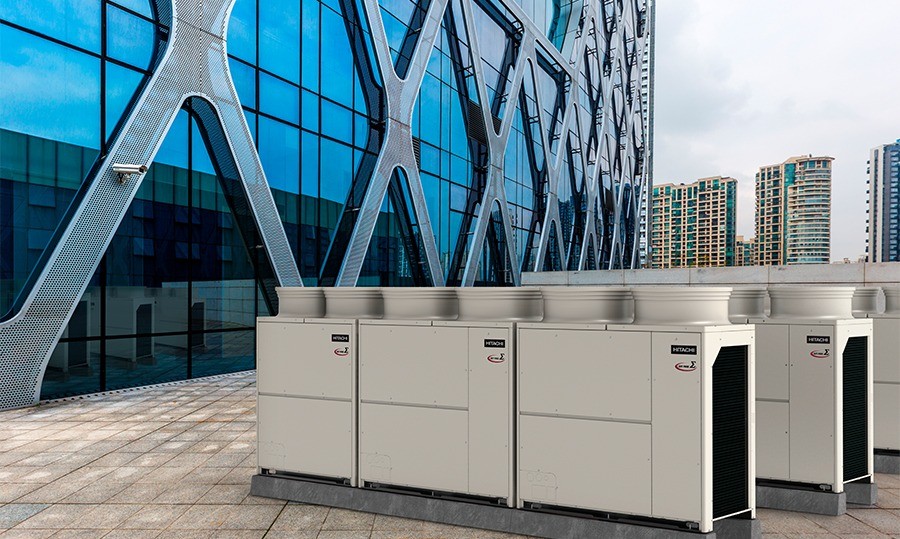
VRF may be evaluated where multiple zones, flexible indoor-unit selection and decentralized control are important. The design should coordinate indoor units, outdoor equipment, piping, drainage, electrical work, ventilation and controls.
Product-family names, connection limits, capacities, refrigerants and operating ranges are manufacturer- and model-specific. They should be confirmed from the approved submittal for the equipment proposed to the project.
Hitachi chiller and central cooling pathway
For larger centralized cooling requirements, the project team may evaluate chiller equipment together with pumps, piping, air-handling systems, controls and plant infrastructure. Equipment choice is only one part of overall plant performance.
The proposal should clearly define the design basis, required capacity, redundancy philosophy, electrical conditions, plant location and air-side integration.
Selection and technical submittals
A useful submittal allows consultants and owners to review compliance against the project requirement. It should identify the exact offered equipment, relevant performance information, dimensional data, electrical requirements and installation considerations using approved documentation.
If information is not confirmed for the offered model, it should not be presented as a universal Hitachi specification.
Delivery and lifecycle support
Equipment logistics, installation access, commissioning responsibilities and after-sales support should be discussed before procurement. The project team should also plan for filters, coils, drains, electrical checks, controls and specialist service over the operating life of the system.
Frequently asked questions
Practical questions about this topic
Which Hitachi HVAC system is right for a commercial project?+
The answer depends on the cooling loads, zoning, building scale, ventilation, plant space, controls and maintenance strategy. A project-specific assessment is required.
Can online specifications be used for final selection?+
Final selection should use approved, current manufacturer documentation for the exact proposed product and market configuration.
Does Abontika provide technical coordination?+
Abontika's current commercial pages describe support for selection, supply, installation and commissioning. The project scope should be confirmed for each enquiry.
Project support
Need support with an HVAC project?
Share your building type, project location, drawings and current stage. Abontika can help coordinate the appropriate technical next step.